Re-roofing? Natural slate suits Winchester’s period villas and conservation streets; clay or concrete tile suits most 20th-century homes. Here is the honest comparison on cost, lifespan and matching.
For a Winchester re-roof, natural slate suits period and conservation-area villas and lasts 80–150 years; clay or concrete tile suits most 20th-century stock and costs less. The original covering and conservation rules usually guide the choice — slate for slate, clay for clay. Free survey. Call 01962 809171.
✓ NFRC Registered
✓ Fully Insured
✓ 10-Year Guarantee
✓ Free Quotes
✓ No Hidden Costs
✓ Family Run Since 2003
The choice
Slate or Tile: Which Roof for Your Winchester Home?
When you re-roof a Winchester property, one of the first decisions is the covering: natural slate or clay/concrete tile. It is partly practical and partly about matching the house and, on many Winchester streets, satisfying conservation rules. Slate suits the city’s finer Victorian and period villas; tile suits the vast majority of 20th-century stock. Here is the honest comparison.
This page is about the slate-versus-tile choice specifically. For the clay-versus-concrete tile decision within the tile option, see our clay vs concrete guide.
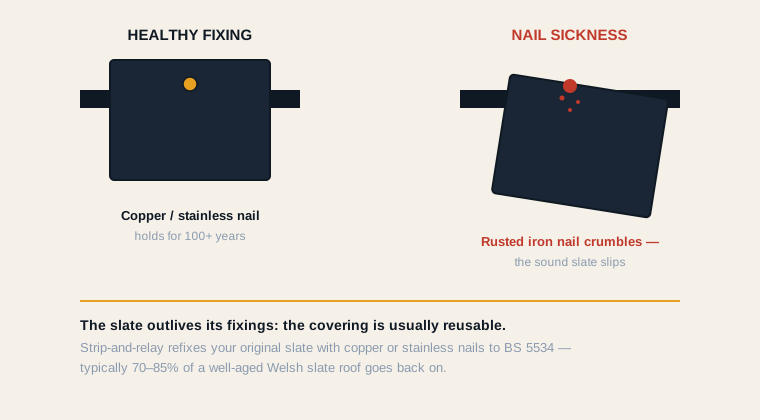
Both slate and tile eventually suffer nail fatigue — the fixings fail before the material doesSide by side
Slate vs Tile Compared
Factor
Natural slate
Clay / concrete tile
Lifespan
80–150 years
Clay 60–100+, concrete 50–60
Look
Thin, flat, fine — period-authentic
Profiled or flat; huge range
Weight
Lighter per m² than concrete
Concrete is heaviest; clay moderate
Cost
Highest
Concrete lowest, clay mid–high
Best for
Victorian/period villas, conservation streets
1930s–modern stock, most re-roofs
Conservation fit
Usually required on slate-original roofs
Clay often required on clay-original roofs
Fixing
Nailed — skilled, slower to lay
Nailed/clipped — faster
The Winchester reality: on the natural-slate villas of St Giles Hill and the finer period streets, a slate roof was original and conservation rules usually require slate again on any renewal. On the clay-tiled Victorian terraces of Hyde and Fulflood, clay is typically required to match. On the 1930s semis of Weeke and the post-war estates of Harestock and Teg Down, concrete or clay interlocking tile is both original and the sensible, cost-effective choice.
Deciding
How to Choose
1. What is on there now?
The strongest guide is the original covering. Matching it keeps the house looking right and, in a conservation area, is usually a requirement rather than a choice.
2. Conservation status
On listed buildings and in Winchester’s conservation areas — St Cross, Hyde, the city centre — the material is often dictated. We advise on what will be acceptable before you commit.
3. Structure and weight
Concrete tile is heavy; a roof designed for slate or clay may need structural checks before switching to concrete. Slate is lighter and rarely a structural problem.
4. Budget vs lifespan
Slate costs most up front but lasts longest — a century-plus — so on a period home you may re-roof once in your lifetime. Concrete is cheapest but has the shortest life.
5. The right match
On a modern estate, matching your neighbours in interlocking tile is right. On a period villa, slate is worth the premium for authenticity and longevity.
Timescales
How Long a Re-Roof Takes
Roof
Slate
Tile
3-bed semi
8–12 days
5–8 days
Period villa
10–16 days
8–14 days
Slate is slower to lay by hand; both are timed around dry weather and never left open overnight.
Access
Scaffold for a Re-Roof
Any full re-roof needs perimeter scaffold for safe standing and material handling, in both slate and tile. On Winchester’s conservation streets — the fine villas of St Giles Hill, the terraces of Hyde — scaffold often oversails the footway and needs a licence from Winchester City Council, which we arrange and itemise.
Cost
What Each Costs in Winchester
Roof
Slate
Tile
3-bed semi re-roof
£12,000–£18,000
£6,500–£10,000 (concrete)
Period villa
£15,000–£25,000+
£8,500–£14,000 (clay)
Per m² (supply & fit)
£180–£280
£80–£160
What moves the price
Material — natural slate is the premium; concrete tile the most economical
Conservation requirements forcing like-for-like reclaimed or natural material
Roof complexity — valleys, hips and dormers add labour on either
Structural work if switching to heavier concrete on a roof built for slate
Worked example: Re-roofing a St Giles Hill Victorian villa in natural slate, as conservation required, ran to around £18,000; the same roof in concrete tile would have been roughly half — but would not have been permitted and would have looked wrong on the street.
Covering SO22, SO23, SO21 and surrounding postcodes.
Guarantee
Warranties and Longevity
Natural slate itself can last 80–150 years; clay 60–100+; concrete 50–60. Whichever you choose, our 10-year workmanship guarantee covers the installation, and the tiles or slate carry their own manufacturer warranties. On a period home the longevity of slate often means one re-roof rather than two over the building’s next century.
Good to know
Heritage and Matching
On listed and conservation-area roofs the material choice is part of a wider heritage-roofing discipline — lime mortar, traditional detailing, matched reclaimed materials. See our heritage roofing page for that, our slate roofing and roof replacement pages for the work itself, and the clay vs concrete guide for choosing within the tile option.
Matching
Matching on Winchester’s Period Streets
On a period roof the material is only half the battle — matching it convincingly is the rest. Winchester’s conservation areas expect a re-roof to disappear into the street, not announce itself, which means the right slate size and colour or the right clay tile profile and weathered tone. On slate villas that often means sourcing natural slate of the correct dimensions rather than the nearest stock size; on clay-tiled terraces it can mean blending reclaimed tiles with new to avoid a jarringly bright new roof next to weathered neighbours. We advise on what will pass and what will look right, and we source accordingly.
There is also a structural point that catches people out. Concrete interlocking tile is markedly heavier than natural slate or clay plain tile, so a roof structure built a century ago for slate cannot always simply take concrete without checks or strengthening. Switching down in weight — slate to slate, or slate to lighter clay — is rarely a problem; switching up to concrete on a period roof is where we sometimes have to recommend a structural look before committing. It is one more reason the honest default on a period Winchester home is to match what was there, in the material the building and the street were designed around.
FAQs
Common Questions
The strongest guide is the original covering and any conservation requirement. Natural slate suits period and Victorian villas and is often required on conservation streets; clay or concrete tile suits the majority of 20th-century Winchester stock and is more economical. We advise on what will match and what is permitted.
Natural slate lasts longest — 80 to 150 years. Clay tile lasts 60–100+ years and concrete tile around 50–60. On a period home, slate often means re-roofing once rather than twice over the building’s life.
Yes. Natural slate is the premium option at around £180–£280 per m² fitted, versus roughly £80–£160 for tile. It costs more up front but lasts far longer, so the cost per year can be comparable on a period roof.
Not without checking. Concrete tile is significantly heavier than slate, so a roof structure designed for slate may need strengthening first. Slate or lighter clay is often the safer like-for-like replacement, and on conservation roofs concrete is usually not permitted anyway.
Often, yes. On listed buildings and in conservation areas such as St Cross, Hyde and the city centre, the roofing material is usually required to match the original — slate for slate, clay for clay. We confirm what is acceptable before any work.
Natural slate on a slate-original villa and clay tile on a clay-original terrace keep the house authentic and satisfy conservation. Switching a period roof to concrete tile usually looks wrong and is rarely permitted.
Slate is slower to lay by hand — typically 8–16 days for a house depending on size — against 5–14 days for tile. Both are timed around dry weather and the roof is never left open overnight.
Second opinion
Not Sure Which Your Roof Should Have?
If you have inherited a tired roof and are unsure whether it was originally slate or tile, or whether a conservation rule applies to your street, a free survey settles it. We identify the original covering, check the structure, confirm what building control and any conservation designation will accept, and give you a written recommendation with costs for both routes so you can decide with the full picture. On a period Winchester home that decision shapes the look of the house for the next fifty years, so it is worth getting right the first time.