Winchester is one of England's great historic cities, and much of its housing stock sits within conservation areas or is individually listed. Roofing these properties is a specialist discipline: the materials must match the original, the methods must respect the building's age, and the correct consents must be in place before work begins.
Matching materials
Conservation roofing means like-for-like: handmade or reclaimed clay peg tiles for clay roofs, natural Welsh or Cumbrian slate for slate roofs, sourced to match the existing colour, size and texture. We source from established reclamation and heritage suppliers and confirm the match with samples before any order is placed.
Traditional leadwork
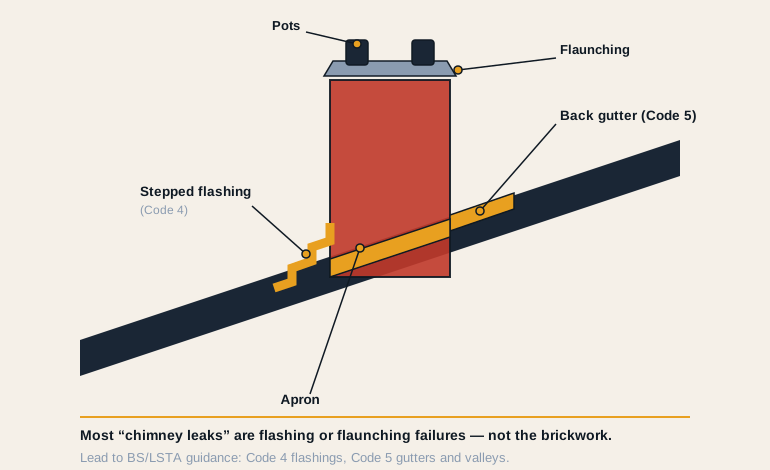
Historic Winchester roofs rely on traditional leadwork — flashings, soakers, valley linings, bay tops and parapet gutters — dressed by hand to Lead Sheet Association standards in the correct code. Much of the original lead on Winchester's Victorian and older properties is now 100–150 years old and at end of life. We renew it using code 4 and code 5 sand-cast or milled lead as the position requires, with correct thermal movement allowance and stainless fixings, so it lasts another 60–80 years. Bay window tops and parapet gutters — common on Winchester's period townhouses — are among the most failure-prone lead elements and among the most important to detail correctly.
Consents and liaison
Work to a listed building almost always needs Listed Building Consent, and significant work in a conservation area may need permission too. We prepare the material specifications, liaise with the Winchester City Council conservation officer, and ensure the work is compliant before it starts.